

Geoffrey Carlisle
Staff Product Manager

Yrieix Garnier
Modern government missions depend on software platforms that can perform under demanding conditions. As agencies update systems that support public safety, benefits delivery, financial operations, and national priorities, they face security and compliance requirements that shape how technology is adopted as well as how it is built, operated, and evolved over time.
Today, Datadog for Government achieved FedRAMP® High certification, supporting the federal government’s most sensitive civilian workloads. With this certification, Datadog for Government (US1-FED) now operates within a FedRAMP High-certified environment. This allows agencies currently on US1-FED for FedRAMP Moderate to use the same unified observability and security capabilities across higher-sensitivity systems without introducing separate tools or workflows.
This milestone reflects our commitment to ensuring that Datadog meets NIST standards for confidentiality, integrity, and availability while continuing to deliver the depth, breadth, and pace of innovation that Datadog is known for.
A commitment fulfilled and a mission that continues
In 2023, Datadog announced plans to pursue FedRAMP High certification. Agencies need a single, fully managed SaaS platform capable of supporting sensitive workloads in a highly secure environment to move faster and maintain continuous monitoring without sacrificing security or federal requirements.
Achieving FedRAMP High fulfills that goal. It enables public sector teams to observe, secure, and optimize the systems they rely on, at any scale or level of sensitivity.
Why FedRAMP High matters now
FedRAMP High is a rigorous security baseline under the Federal Risk and Authorization Management Program. It is designed for cloud systems where a security incident or service disruption could have a severe impact on agency missions, public trust, or national interest.
Organizations that are supporting emergency response, law enforcement, healthcare delivery, benefits administration, financial operations, and other high-impact services often require FedRAMP High certification before adopting new platforms.
With FedRAMP High, Datadog for Government now supports highly sensitive workloads. This certification means our platform meets NIST 800-53 Rev. 5 standards for security, resilience, and audit-ready continuous monitoring.
All data is processed and stored exclusively in a US1-FED GovCloud environment under physical and logical controls that satisfy federal requirements, without requiring separate tools or changes to existing workflows across lower-impact systems.
What FedRAMP High unlocks for Datadog customers
With FedRAMP certification, public sector teams can integrate Datadog for Government, operated in a FedRAMP High-certified GovCloud (US1-FED) environment to support sensitive and mission-critical systems.
Datadog for Government helps teams turn observability and security signals into operational action through integrated workflows and automation. That includes earlier detection of emerging issues, validation of changes during deployment, and faster response when performance or availability degrades.
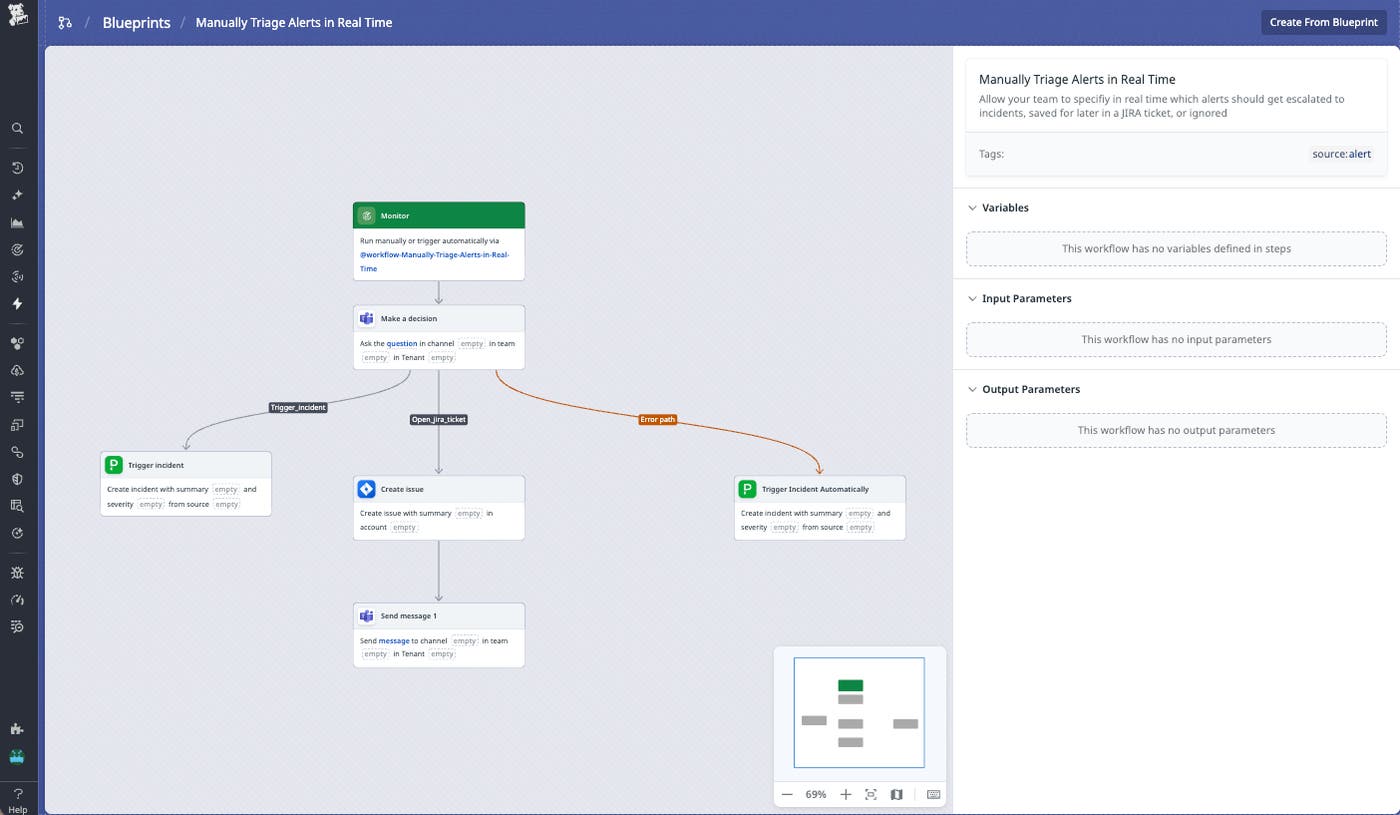
For existing US1-FED customers, FedRAMP High certification seamlessly extends Datadog for Government’s capabilities without affecting their GovCloud experience.
For new customers, Datadog for Government provides a single observability and security platform already certified for high-impact systems, without the need to integrate separate tools.
Scenario: Maintaining critical services under pressure
Consider a federal agency responsible for a FedRAMP High-certified system that delivers critical benefits and services to millions of users who are accessing time-sensitive applications and data. During a traffic surge, users begin reporting slow page loads and intermittent timeouts.
Using Datadog for Government, DevOps, SRE, and engineering teams have access to shared dashboards that bring together metrics, logs, traces, and security telemetry to confirm rising latency and identify which dependent services are degrading as load increases.
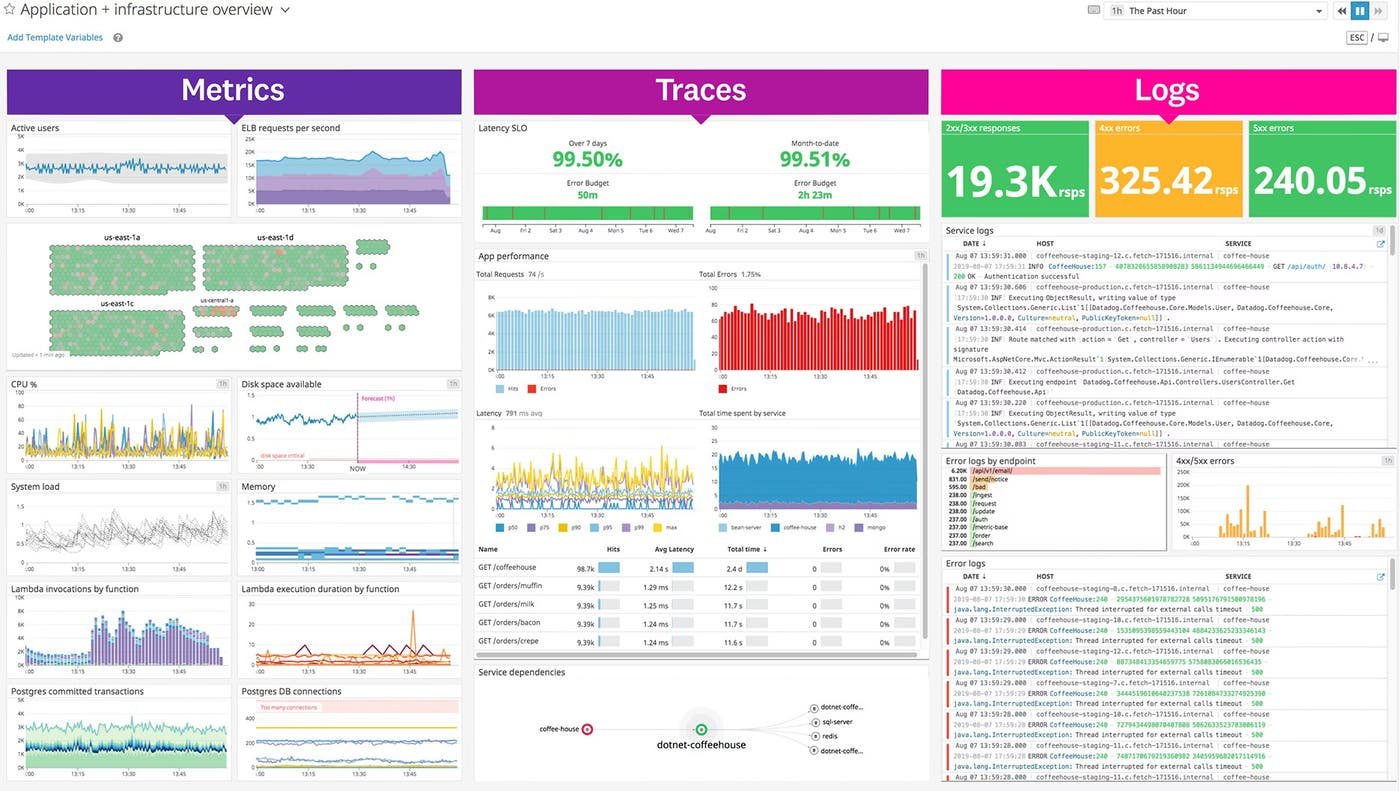
Datadog for Government flags an anomaly in application latency, and targeted alerts remain scoped to the affected services, reducing background noise. By using Application Performance Monitoring (APM) and tracing, teams follow slow requests through the call path and correlate latency spikes with specific infrastructure and network signals, narrowing the investigation to the components that are most likely driving the impact. This built-in anomaly detection surfaces unexpected behavior and helps teams take action in real time.
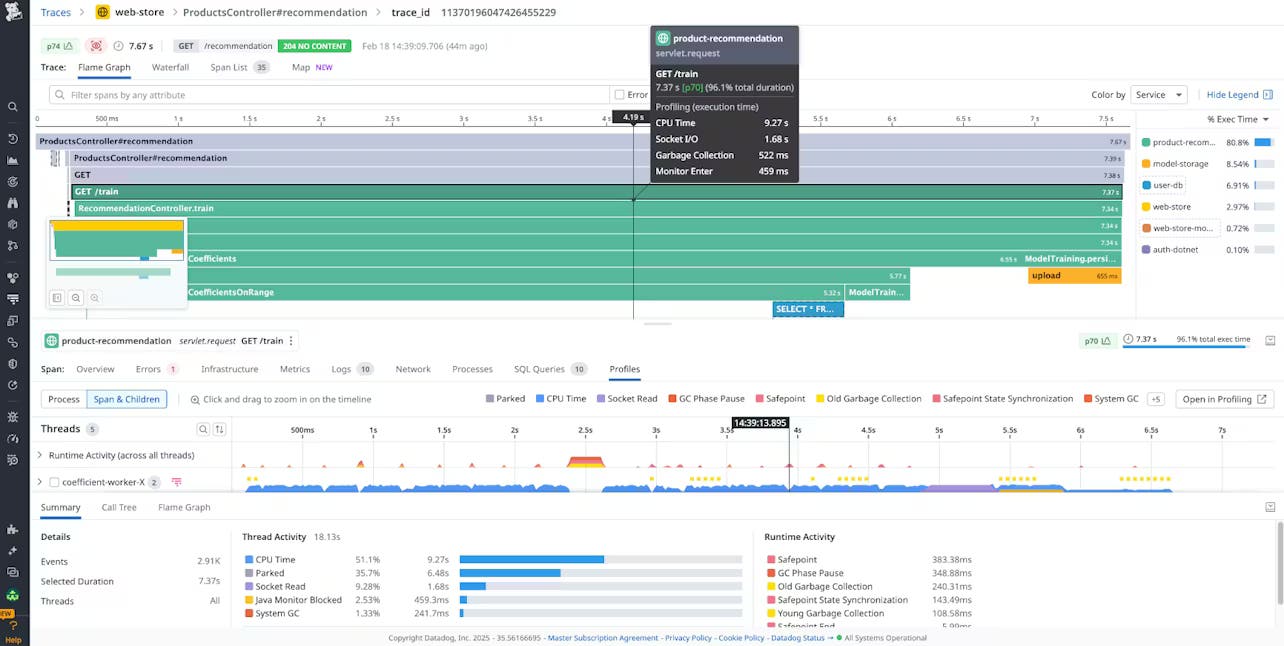
Simultaneously, Datadog for Government ingests and correlates logs with metrics and traces, supporting log retention and search workflows that agencies may configure to align to OMB M-21-31. With that shared telemetry, responders can move from the latency alert to the related requests and error patterns, confirm whether the failures cluster around a specific endpoint or dependency, and continue the investigation without switching tools or losing context.
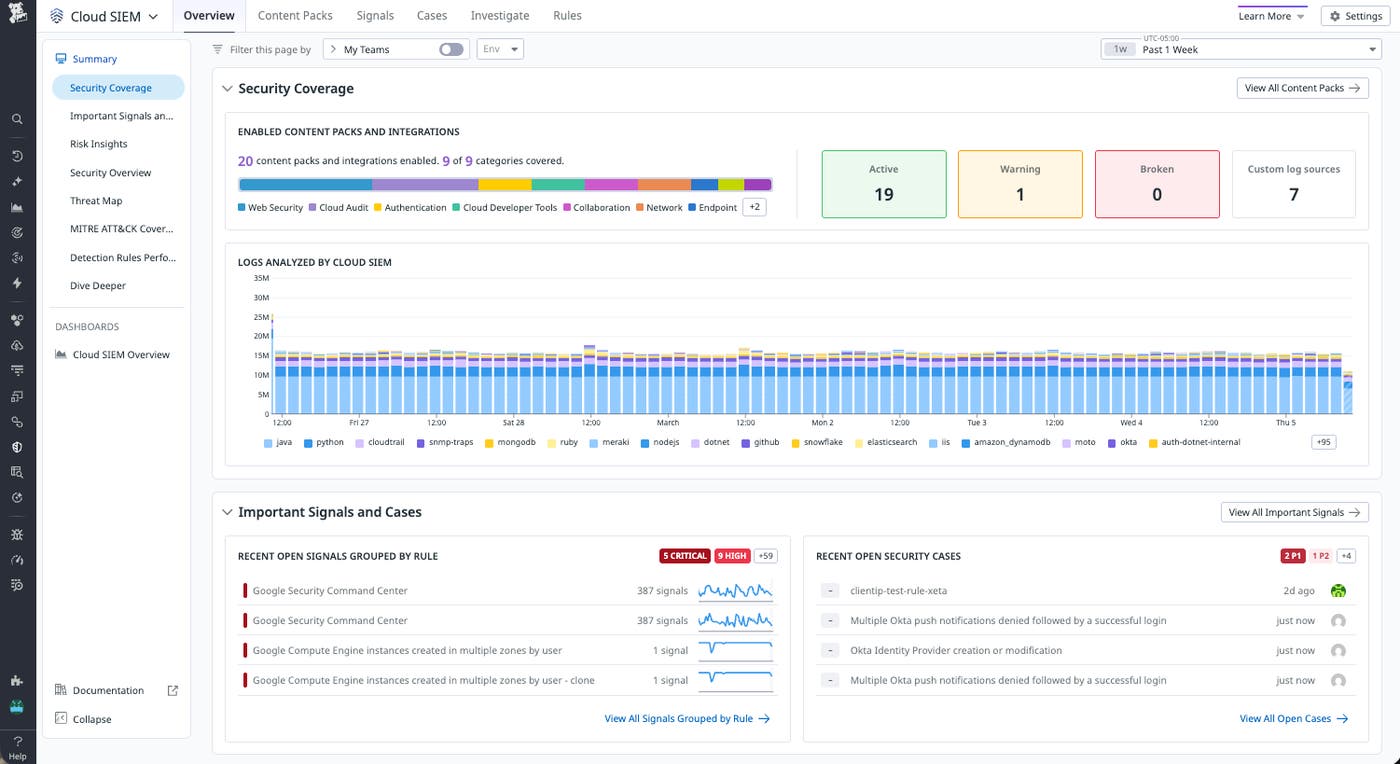
In parallel, a security reviewer looking at the same affected service can see correlated threat detection signals associated with the degradation. Using end-to-end attack flows, the reviewer can determine whether suspicious access patterns or runtime behavior are contributing to the incident, prioritize the most relevant signals, and coordinate remediation steps aligned to Zero Trust practices and ongoing verification.
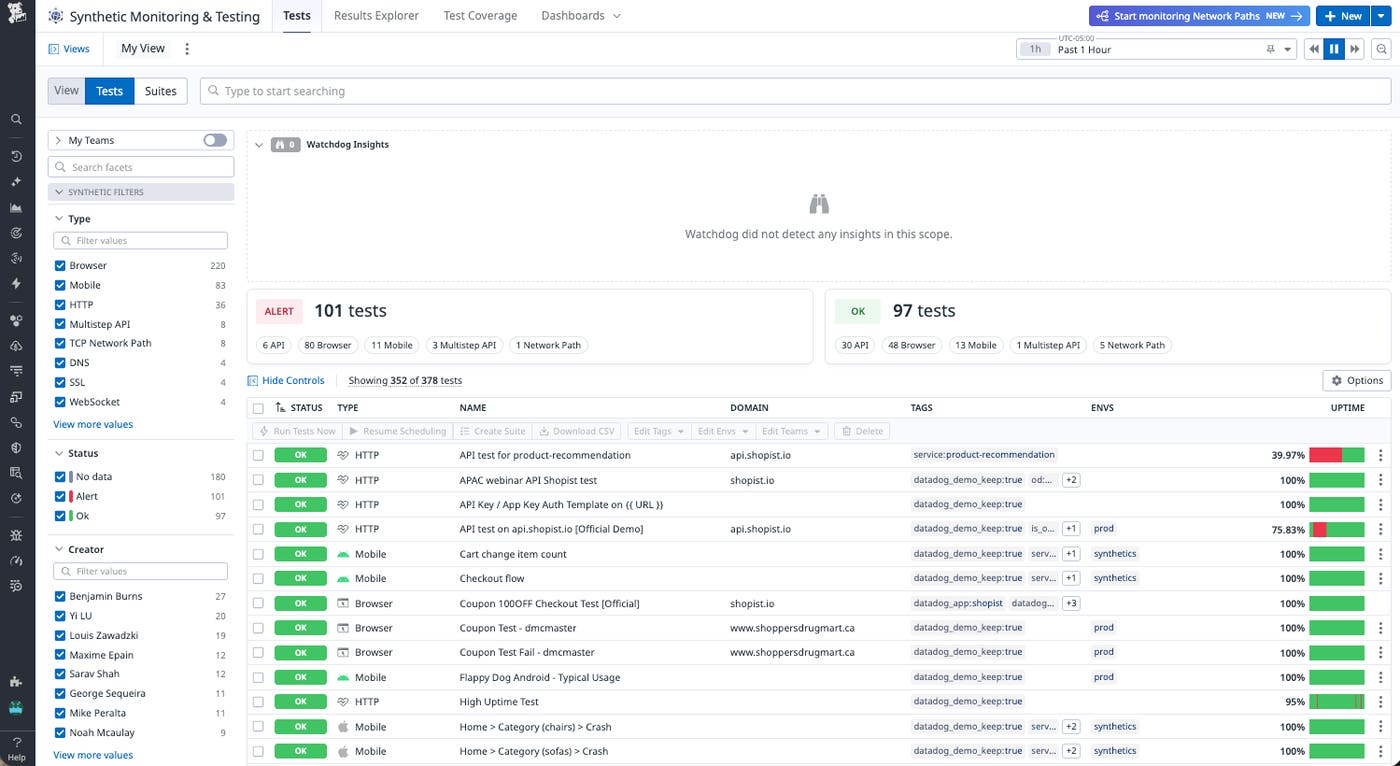
To protect user experience during peak demand, Synthetic Monitoring can simulate key user journeys and validate that the public-facing application is recovering as changes roll out without impacting production users. These synthetic checks provide external confirmation that latency and availability are returning to expected levels, beyond internal telemetry alone.
After service stability is restored, a service owner can review the same correlated telemetry to understand how the surge and remediation actions affect spending by using Cloud Cost Management. That view helps balance performance, security, and efficiency as multiple systems scale while controlling cloud spend.
Supporting compliance while enabling innovation
In regulated environments, observability strengthens security posture, auditability, and risk management. When compliance workflows are embedded into day-to-day operations, teams can meet requirements while maintaining consistent operational practices. This philosophy guided how Datadog for Government was developed and continues to shape how new capabilities are delivered into our FedRAMP-certified environment.
Supporting the public sector today and into the future
FedRAMP High builds on the foundation we established with FedRAMP Moderate. This work supports agencies as requirements evolve, without requiring them to rethink their observability and security strategy or introduce new tools for higher-sensitivity workloads.
FedRAMP High is a significant milestone, but our work doesn’t stop here. Datadog continues to expand support for the Defense Industrial Base and national security workloads, including progress toward Impact Level 5 (IL5) authorization.
Continuing the conversation
Join us at upcoming events like DASH and AWS DC Summit to connect with Datadog and discuss observability, security, and automation in FedRAMP-certified environments.
For teams evaluating Datadog for Government, you can request a demo to see how Datadog supports high-impact public sector workloads. In the meantime, you can explore the platform with a 14-day free trial in a FedRAMP High GovCloud region.
