

Nancy Zhu
Being on call is an essential part of operating reliable distributed systems, but it comes with real human costs such as alert fatigue, sudden wakeups in the middle of the night, and the ongoing anxiety of what the next notification might bring. Many engineers know the feeling: Your phone lights up, a sound cuts through the silence, and your heart rate spikes before you’re even fully awake.
At Datadog, we wanted to rethink what an on-call alert should sound like. Notification sounds directly impact an engineer’s quality of life because the sensory experience of the sound can play a role in causing psychological and physical burnout. This realization led us to redesign our sound library for Datadog On-Call in the Datadog mobile app by using a principle we consider essential: empathy for the responder behind the pager.
In this post, we’ll share how we approached building notification sounds that prioritize engineer well-being, the research that guided us, and the design decisions that shaped the final experience.
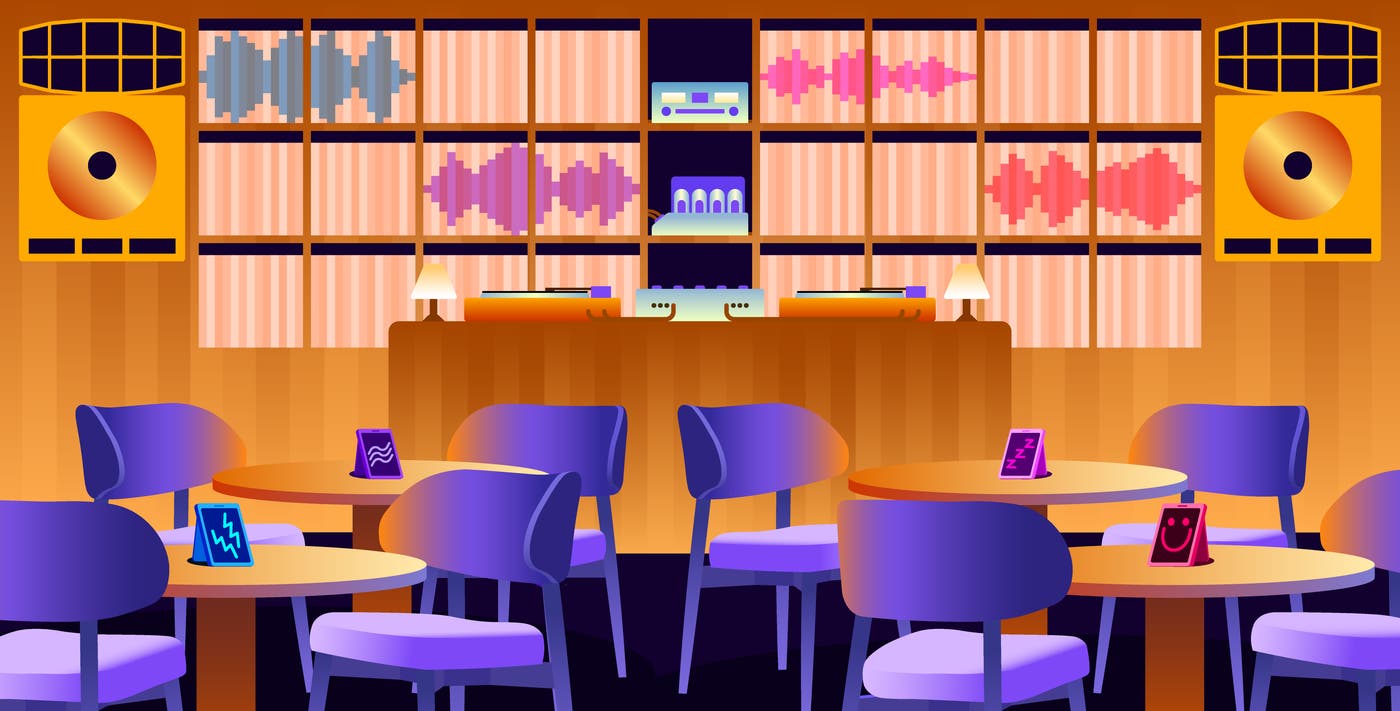
Why on-call sounds matter
On-call alerts often indicate issues that need immediate attention. When something breaks, the alert is usually the first signal an engineer receives. Poorly designed alerts not only increase annoyance and cognitive load, but they also can increase the risk of missed critical issues. In contrast, thoughtfully designed alerts preserve urgency without adding unnecessary stress, helping ensure that the right signals are seen and acted on.
Of course, the best way to reduce alert fatigue is to minimize unnecessary notifications. Strong alert hygiene, clear ownership, and well-tuned monitors are foundational. For the alerts that do fire, sound design becomes a powerful lever.
Developing the sounds
We worked with Sanctus, an agency that specializes in creating, editing, and mixing audio, to expand our notification library. We took a research-first approach to rethinking the sounds, incorporating findings from studies on auditory perception, alert fatigue, and emotional tone to understand what makes alerts most effective. Through this research and conversations with our engineers and customers, we identified and validated four on-call sound personas.
The Noise Navigator
The Noise Navigator is typically in loud environments and must react without hesitation when an alert fires. Research shows that not all loud sounds are equally effective. Simply increasing volume does not guarantee clarity. Studies in aviation and medical alarm design demonstrate that short pulses under 500 ms, built around lower fundamental frequencies and enriched with harmonics, are easier to distinguish in noisy environments. Structured bursts and subtle pitch movement can further improve detectability without increasing harshness.
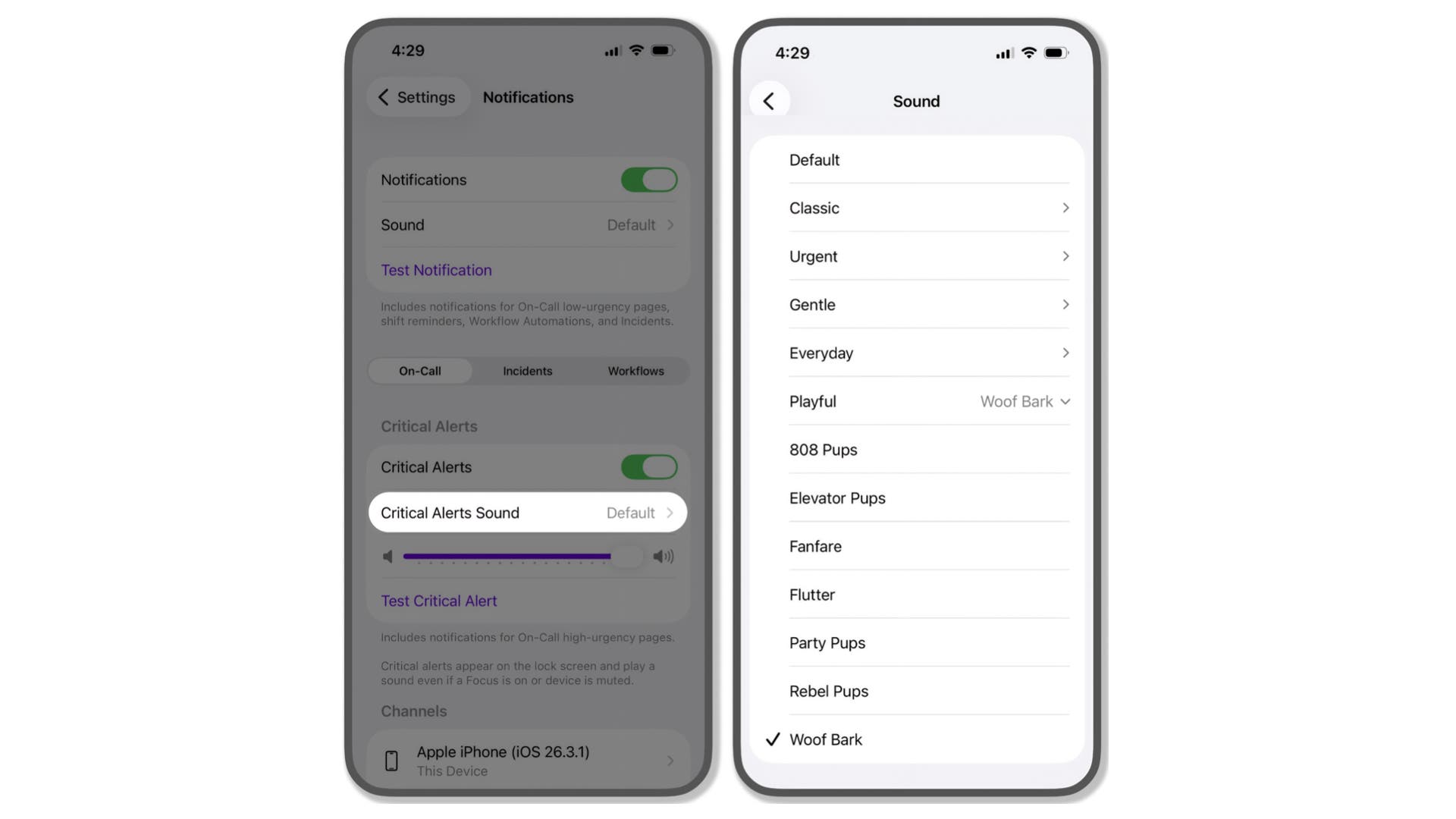
We translated these insights into harmonically rich, percussive bursts with slight variations in pitch. These sounds, which appear in the Urgent category in our sound library, cut through the noise of busy offices and public settings without becoming punishing over time.
Example: Shadow
The Discreet Engineer
The Discreet Engineer does not want to disrupt family members or coworkers in shared spaces. We turned to research on ecologically valid sounds, alerts that resemble familiar environmental cues. One study found that context-matching sounds (such as a hanger sliding in a retail setting) were just as detectable as artificial or out-of-place alerts, particularly when users expected them.
This information inspired subtle, context-blending microsounds, such as shuffling cards or cowbells, designed to feel natural in shared environments. These sounds, labeled as Everyday in the sound library, are recognizable to the intended listener but easily interpreted by others as part of the ambient background.
Example: Card shuffle
The Sleepy Engineer
The Sleepy Engineer needs alerts to wake them up reliably but also wants to avoid adding stress to an already demanding role. To address these priorities, we looked into decades of fire safety research on alarm effectiveness. Contrary to common assumptions that higher pitch means greater urgency, studies show that lower-frequency tones of around 520 Hz wake sleepers more effectively than traditional high-pitched alarms. In some populations, these lower tones were found to be up to 10 times more effective—a powerful reminder that how a sound is engineered matters more than how sharp it feels.
Awakening, however, is only the first step. Responders must also overcome the grogginess and reduced cognitive performance that impair reaction time and decision-making. Research has demonstrated that melodic alarms can improve post-waking attentiveness compared to rhythmic or neutral tones, leading to fewer errors and faster cognitive engagement.
We combined low-frequency acoustic strength with warm melodic structures and rounded tonal qualities to create sounds that wake users reliably and support a smoother and more alert cognitive transition. These sounds are classified as Gentle in the sound library.
Example: Cascade
The Humorist
The Humorist prefers to lighten the weight of being on call by turning alerts into moments of levity. Research supports voice as a particularly effective notification medium. One study found that spoken alerts were identified correctly 98.5% of the time and were recognized faster and with greater confidence than other alerts.
This evidence opens the door to witty phrases, playful lines, or lyrical moments that add humor to the alert experience. For this persona, qualities like surprise, absurdity, and comedic timing matter almost as much as recognizability. As one might expect from a company named Datadog, we blended some canine-inspired voice sounds with other tones to help ease the tension. These options are available in the sound library’s Playful category.
Example: Woof bark
The evolving sound library
Together, these design decisions resulted in a curated collection of notification sounds that are different from typical alert tones both acoustically and emotionally. Some are calm enough to ease fatigue. Others are engineered to stand out in noisy environments without being harsh. Most importantly, the library is intentionally diverse because the right notification sound is personal, not universal. We’ll continue to evolve and expand the library as we learn from research and our customers.
On-call life will always include urgency, but it doesn’t have to mean unnecessary stress. Runbooks and other intelligent tooling help engineers get to the root cause of issues faster, and thoughtful sound design supports the human side of that work. By basing our sound design on research and a deep respect for the human experience, we hope to help engineers rest a little easier and maybe even get a bit more sleep.
To receive alerts with Datadog, you can use On-Call and get notifications through the Datadog mobile app. If you’re new to Datadog, you can sign up for a 14-day free trial to get started.