

Kevin Francis
This guest blog post is authored by Kevin Francis, a Platform Engineering Manager at Cambia Health Solutions
As part of the platform engineering team at Cambia Health Solutions, my team and I work to provide the modern, reliable infrastructure that enables application development teams to create and scale personalized health care services. In 2024, we supported our organization as it merged two internal divisions to reduce costs and simplify operations.
In this post, we’ll tell the story of how Datadog helped us successfully merge these divisions and significantly optimize their cloud costs. We’ll show you how Cloud Cost Management (CCM) and the Resource Catalog helped us uncover and implement cost-savings opportunities. We applied these insights to standardize our Amazon Relational Database Service (RDS) infrastructure and lay the groundwork for an improved Reserved Instance (RI) purchasing strategy, leading to nearly $30,000 in monthly RDS savings.
Unifying observability
Before the merger, the divisions used separate observability platforms, resulting in fragmented data across teams and AWS accounts. Infrastructure metrics, logs, cloud usage, cost information, and resource metadata were not visible in a centralized location. This fragmentation hindered operational awareness, and we struggled to find and mitigate issues such as unencrypted S3 buckets, outdated Python runtimes, and cost inefficiencies across our cloud databases.
Unified observability was a critical goal of the merger, both to simplify operations and to enable cost optimization. Without a consolidated view of resources and spending, we could not identify viable, impactful cost reduction opportunities.
Identifying high-impact RDS savings with CCM
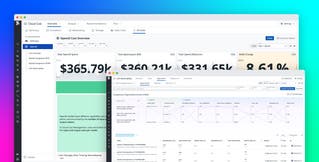
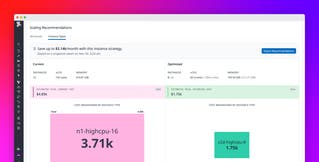
By standardizing on Datadog across the newly integrated teams, we gained a complete, cross-account view of metrics, cost data, and resource inventory. CCM provided insight into historical usage and spend, while Resource Catalog supplied a unified inventory of cloud resources across all AWS accounts. With visibility into our full infrastructure footprint, CCM identified nearly $30,000 per month in potential savings through RI purchases for RDS, which had long been one of our most significant sources of cloud costs.
This recommendation represented a particularly high-impact opportunity—an RI purchasing strategy that would cover instances across multiple teams and AWS accounts, and that targeted one of the largest contributors to our cloud spending. It highlighted the breadth of RDS instance classes we used. With workloads distributed across many classes, any new RI purchases risked locking us into long-term commitments with low utilization. Resource Catalog reinforced this insight by showing that our environment included underutilized instances. To improve our RI coverage and realize the cost-savings potential of the merger, the teams needed to narrow their RDS footprint to a small number of standard instance classes.
Standardizing the RDS fleet to improve RI coverage
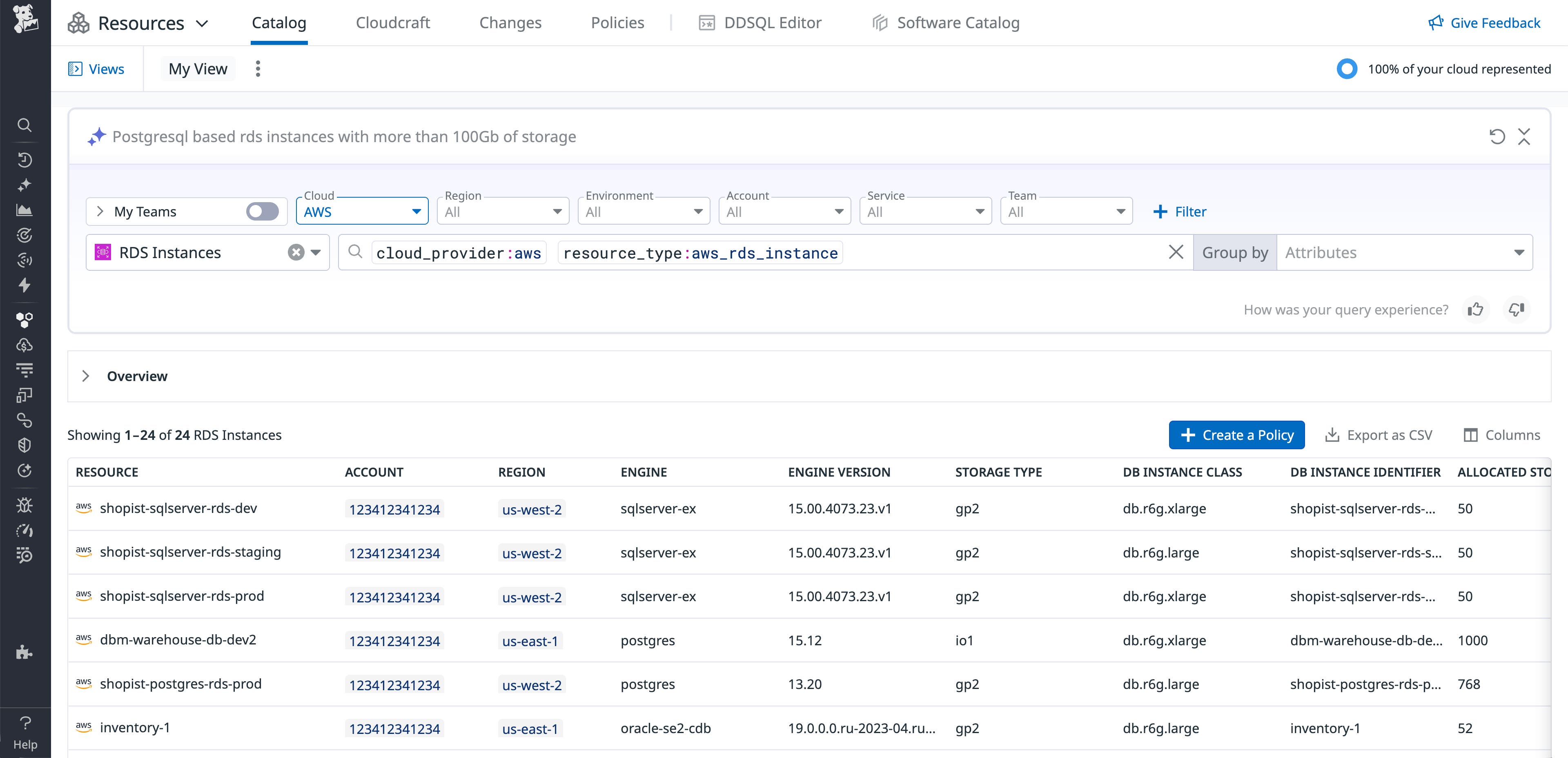
Acting on the recommendation required more than simply purchasing RIs. We first needed to ensure our RDS infrastructure was unified enough for those reservations to apply effectively. We focused on modernizing and consolidating our RDS fleet. Resource Catalog played a critical role by providing a unified, detailed view of all RDS instances, grouped by instance class, generation, engine type, and size.
This analysis showed us that the majority of our RDS usage relied on memory-optimized instance types such as db.r6i and db.r6g. We chose to standardize on the db.r6g instance class, which, due to its Graviton processor, offers excellent price-performance.
Migrating to db.r6g required coordination with workload owners to validate application performance under the new instance type and confirm migration readiness. Once the migrations were complete, we had a fully standardized RDS fleet across accounts—an essential prerequisite to making RI purchases that would span the entire organization.
Centralizing RI purchasing to maximize cost savings
Standardizing our RDS compute on a smaller set of instance types enabled us to simplify our RI purchasing and governance by covering more workloads with fewer reservations. As an even greater benefit, it helped us improve RI utilization by sharing discounts across accounts and using flexible instance sizes within each reservation.
Discount sharing
We also benefited from discount sharing, which distributes RI discounts across all accounts in an AWS Organization. Before the merger, each division purchased RIs independently, which contributed to inconsistent cost governance and underutilized reservations. This decentralized approach also led to gaps in RI coverage, which meant paying undiscounted costs for some of our RDS compute. Post-merger, CCM’s cross-account insight enabled us to create a centralized RI purchasing strategy that applied usage from multiple accounts, improving our RI utilization and cutting our RDS costs.
Size flexibility
Size flexibility allows a single RI to apply to any instance size within the same instance family, which helps us maintain high utilization even as workloads evolve. Because usage from all instance sizes in that family counts toward the same reservation, teams can choose the RDS instance sizes that best meet their needs without jeopardizing RI coverage. For example, both db.r6g.xlarge and db.r6g.large instances apply to the same RI, ensuring that we receive discounted pricing regardless of size differences. Standardizing on a smaller number of instance classes amplified this benefit by concentrating usage in a smaller set of families, making RI utilization both predictable and consistently high.
Monitoring savings with Datadog dashboards
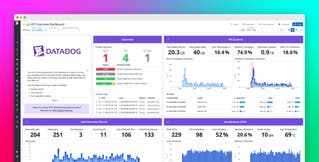
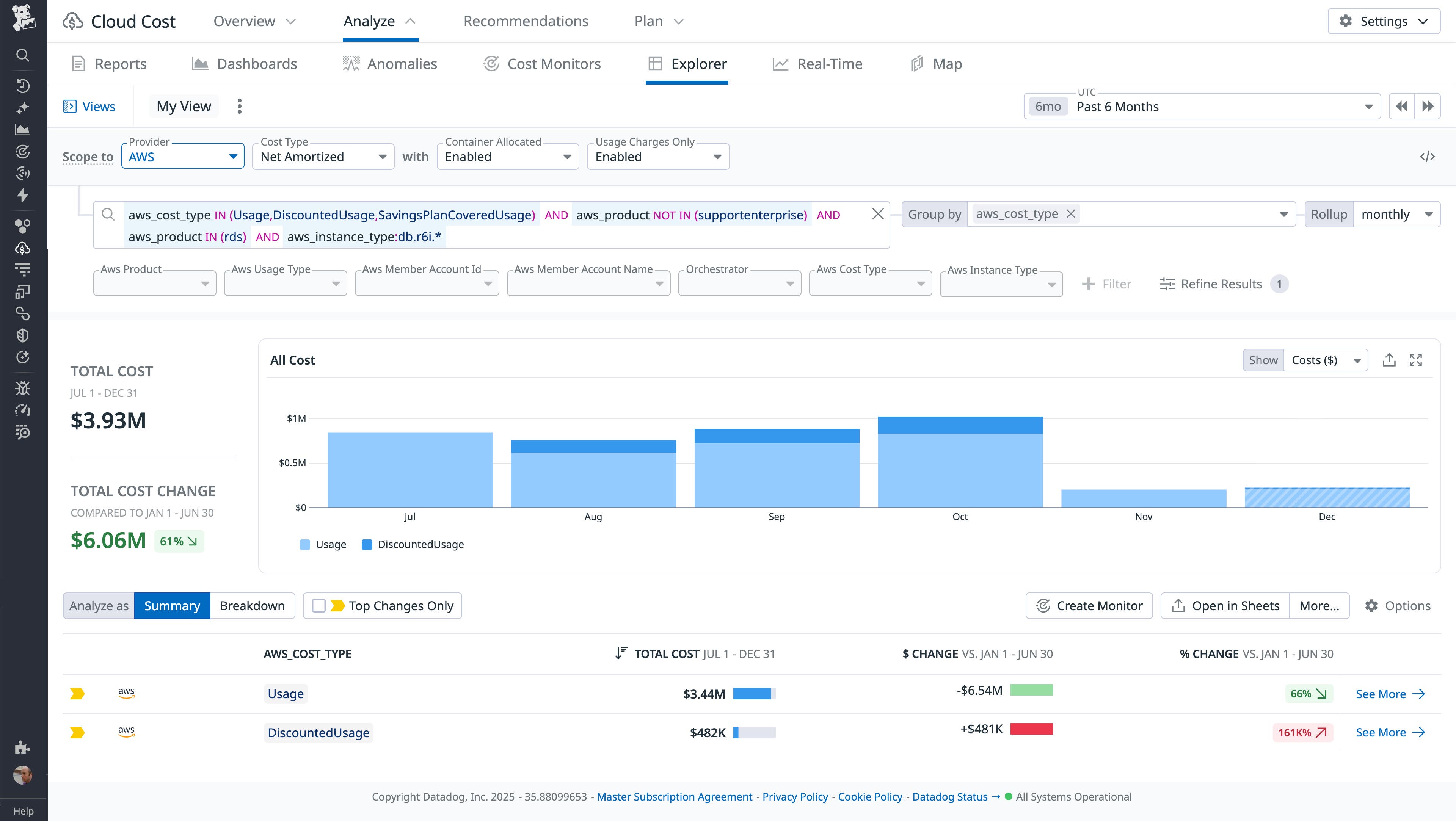
To track the impact of our new reservations, we used Datadog dashboards to visualize month-over-month cost changes and share AWS cost data across the organization. Teams can explore costs by division or workload, see actual RI utilization and savings, compare results against CCM projections, and quickly identify new optimization opportunities.
Preventing drift with Resource Catalog
Resource Catalog remains a key part of our optimization workflow even after the RI purchase, giving teams a way to confirm that instances stay properly configured. This ongoing visibility helps prevent drift back into a fragmented mix of instance classes that would undermine our RI utilization.
Achieving results and applying the framework forward
Our initiative to unify observability and cloud governance after the merger created the visibility needed to uncover significant RDS savings. Guided by CCM’s recommendations, we standardized our RDS infrastructure, modernized to Graviton-powered instances, and centralized our RI purchasing strategy, saving close to $30,000 per month on RDS costs.
This combination of recommendations, modernization, and centralized purchasing has created a repeatable approach for optimizing cloud costs, and we’re now applying this methodology to our DynamoDB and OpenSearch resources.
To learn more about how you can achieve similar visibility and savings, see the documentation on Cloud Cost Management and the Resource Catalog. If you haven’t yet started using Datadog, sign up for a 14-day free trial.