
Roxanne Moslehi
Product Manager

Nicole Parisi

Tom Nof

Kruthi Vuppala
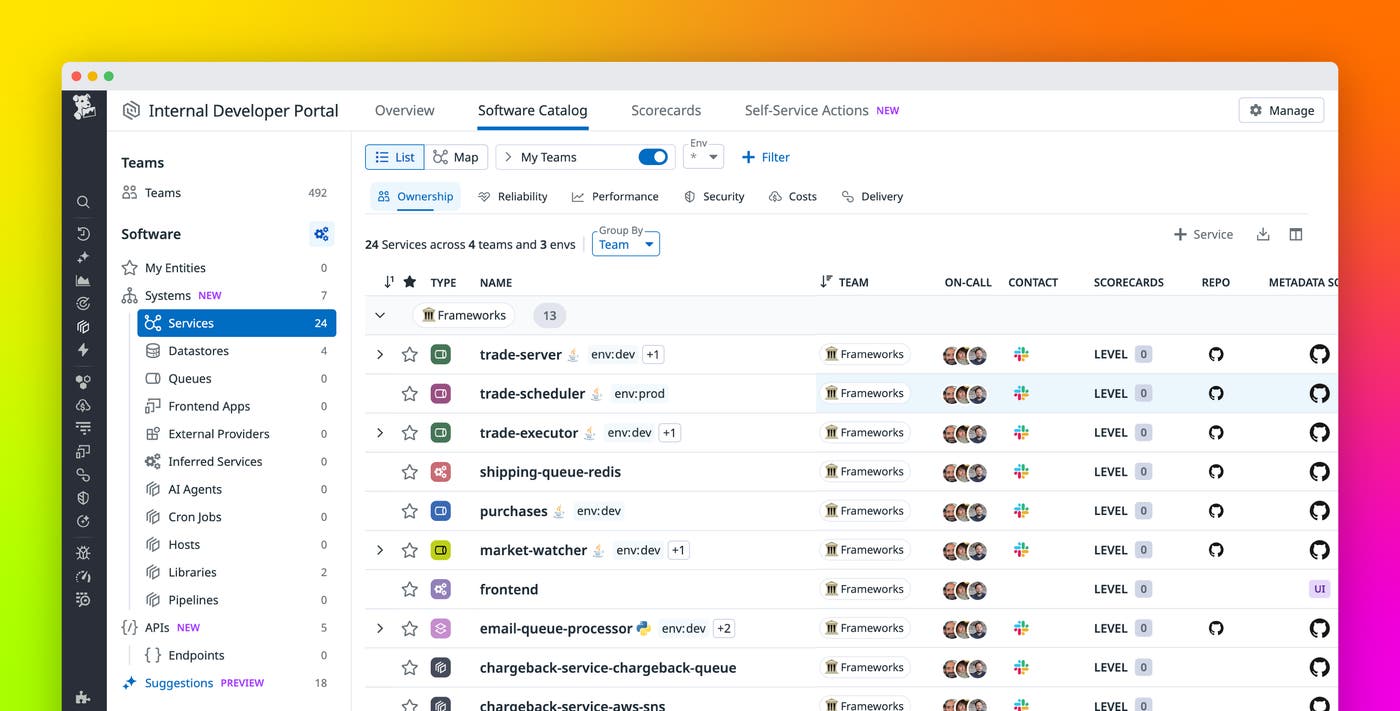
Engineering organizations depend on clear team ownership to maintain reliable services and move quickly. But as codebases expand and teams shift, answering basic questions—Who owns this service? Who should be paged in an incident? Are teams meeting operational standards?—becomes harder. Many companies still manage this information manually through spreadsheets, Slack threads, or static documentation, which creates confusion, slows incident response, and limits the accuracy of engineering health reports.
Datadog Teams now integrates directly with GitHub to easily import team and membership data into Datadog. In this post, we’ll show how this integration, combined with the team hierarchies view in Datadog Internal Developer Portal, helps you maintain an accurate view of your reporting structure and understand who owns each service. We’ll also walk through common use cases for developers, platform teams, and engineering leaders.
Maintain an accurate view of your reporting structure
Accurate ownership data is essential for effective operations, and many engineering organizations already manage their team structure in GitHub. Datadog’s GitHub integration lets you import and continuously sync your GitHub organization’s team definitions and members into Datadog Teams. Once connected, Datadog automatically keeps team and membership info up to date, so there’s no need for manual mapping, CSV uploads, or duplicate configuration.
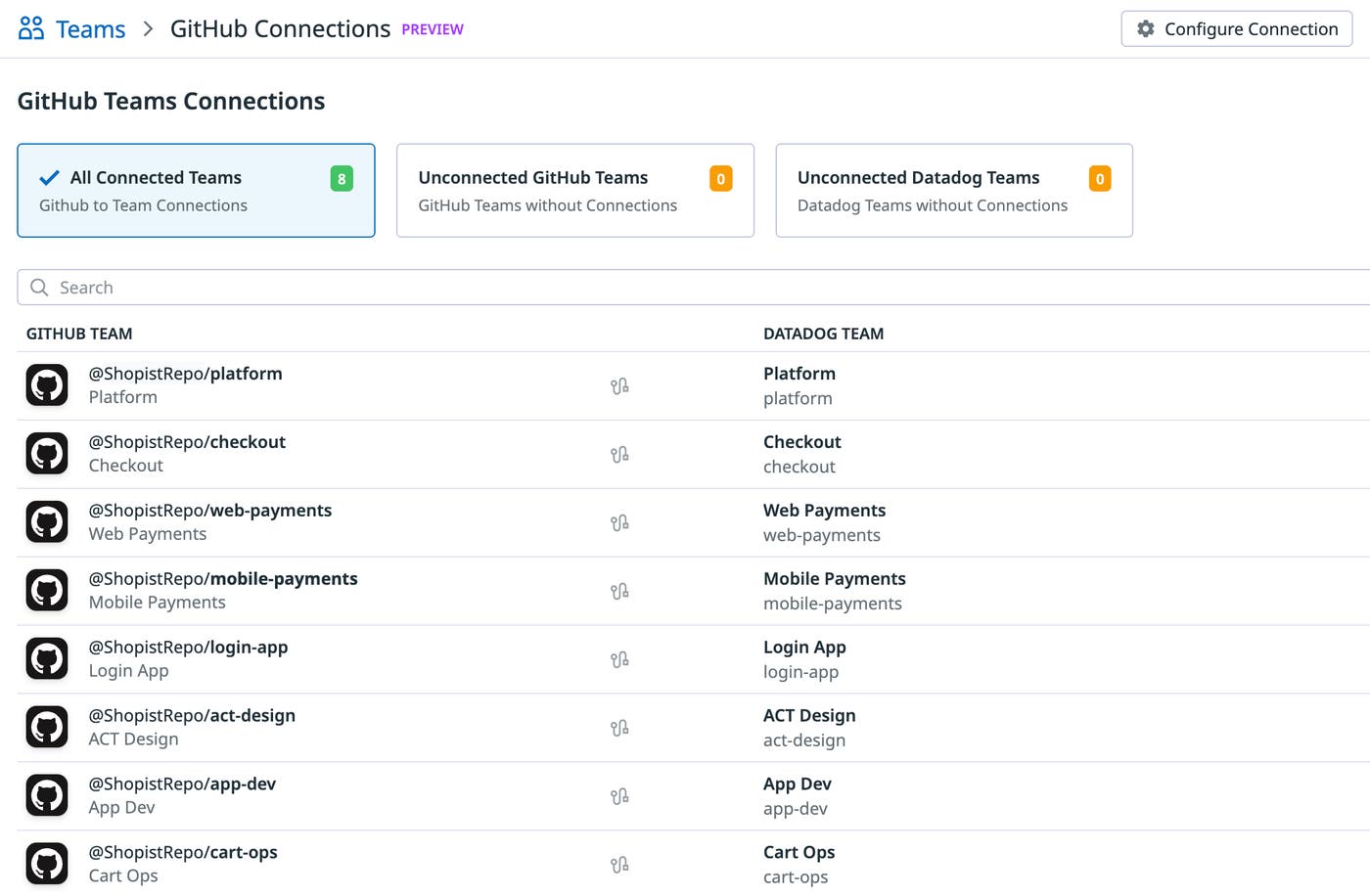
By syncing, you maintain a reliable source of truth for service ownership and drive clearer accountability at every layer of your engineering org. This helps ensure that incident routing, Scorecards, and ownership metadata always reference the correct teams. As teams change in GitHub, those updates flow directly into Datadog, reducing onboarding overhead and removing the risk of outdated ownership information.
Understand team ownership in Datadog
Most engineering organizations aren’t flat, and team relationships, such as groups, departments, and reporting lines, are essential to power accurate ownership info, rolled-up metrics, and personalized views. With your GitHub teams data uploaded into Datadog, you can now see team hierarchy structures directly in Datadog Internal Developer Portal.
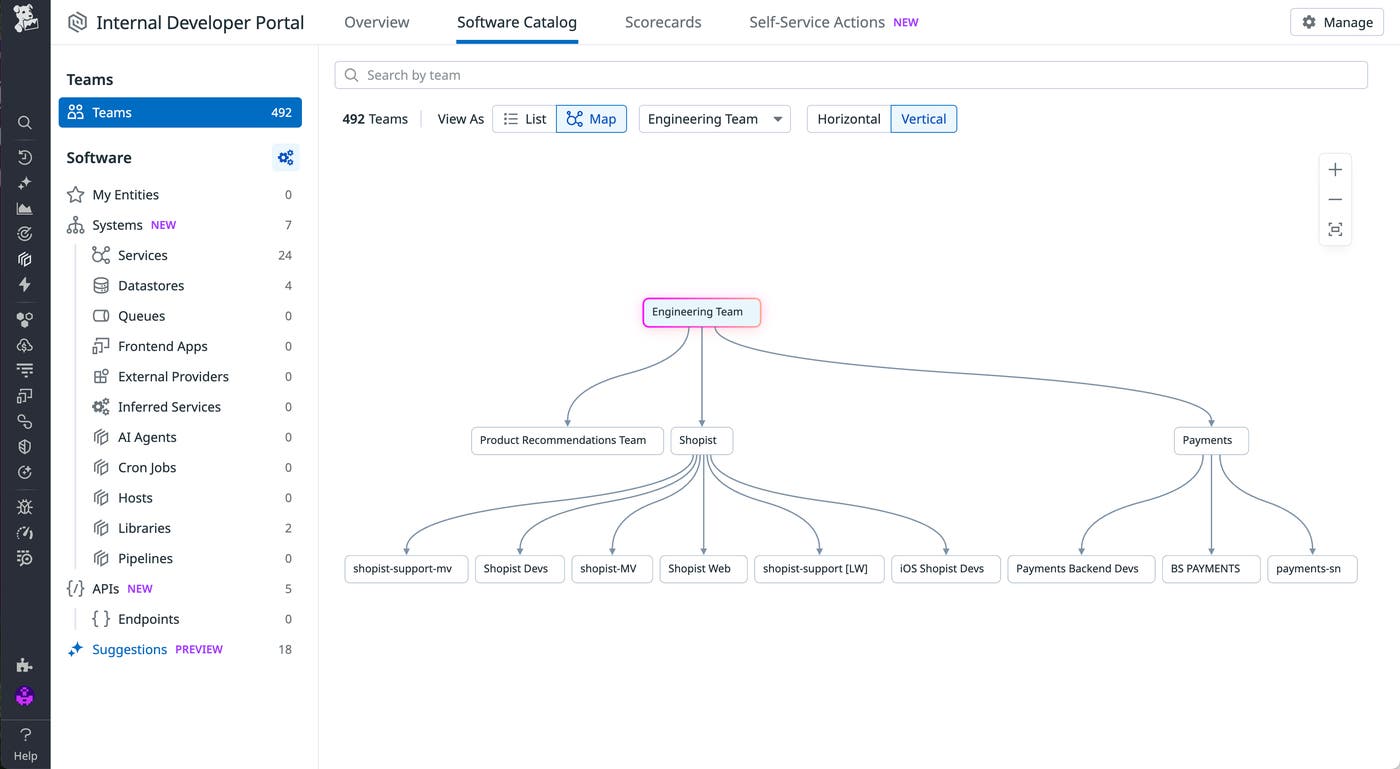
By defining parent-team/sub-team relationships, you get rolled-up views of key engineering metrics such as incidents, SLO performance, DORA metrics, and Scorecards by higher-level teams. Managers only need to be assigned to their top-level teams, reducing duplication and keeping leadership views aligned with reality. Hierarchies offer at-a-glance visibility into gaps, trends, and performance across an entire engineering organization. The result is a living, navigable map of your software ecosystem, backed by organizational data from GitHub that is continuously kept up to date.
What this means for developers and engineering leaders
Having a centralized view of team data from a unified platform benefits every layer of the engineering organization, from individual contributors to executives.
Developer experience and ownership clarity
With Teams pages in Datadog IDP, developers see exactly what their team owns, including services, dashboards, Scorecards, documentation, and other resources. This reduces the time they spend searching through Slack or outdated documents and helps minimize context switching.
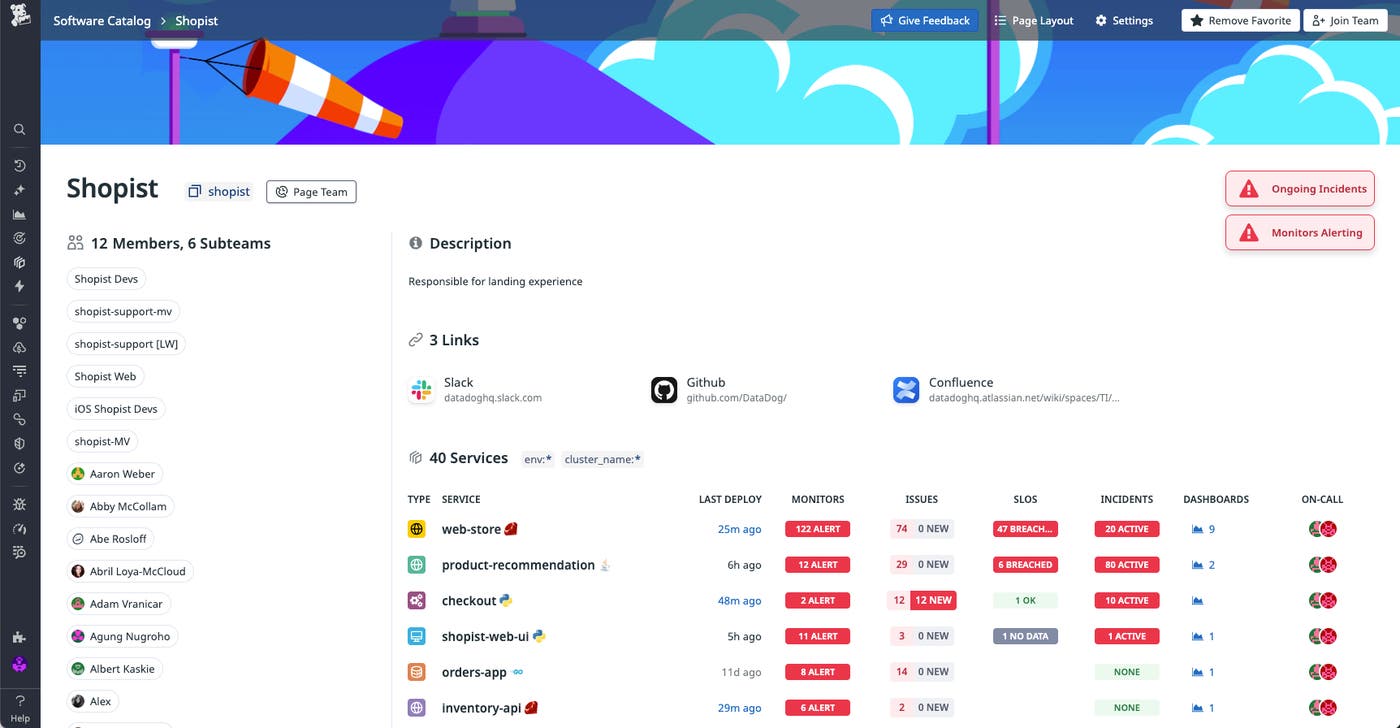
Teams can also quickly identify the owners for any service, repository, or API, which makes it easier to collaborate, investigate issues, and onboard new members. With accurate hierarchies and synced team data, developers see only the alerts and resources relevant to their work, supporting a more focused day-to-day workflow.
Platform and SRE governance
Platform and SRE teams rely on clear ownership to drive operational standards and engineering health. With synced team data, they can use Scorecards and readiness checks to track adoption, compliance, and production-readiness across the organization.
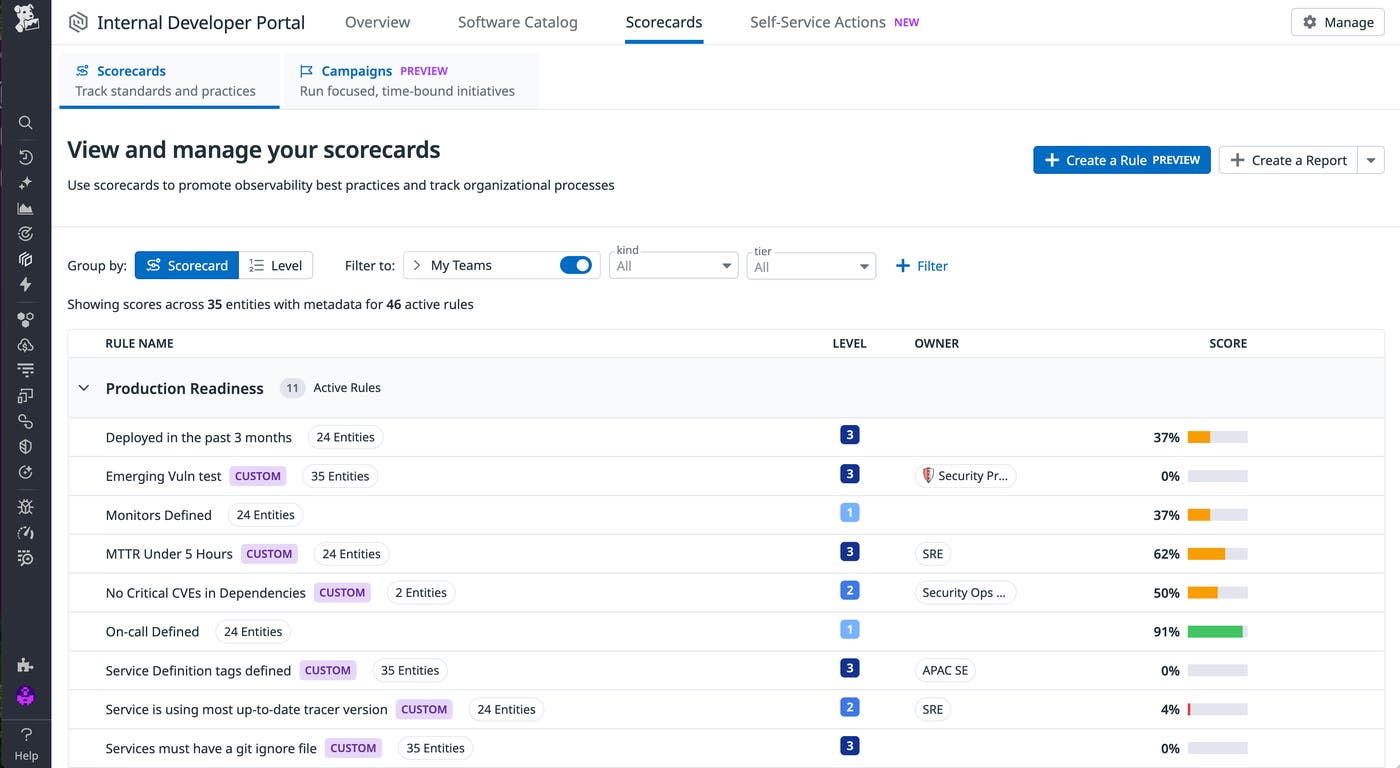
Platform teams can identify where best practices aren’t being followed and support initiatives such as migrations or reliability campaigns.
Engineering leadership visibility and accountability
Managers and directors need reliable, high-level views of engineering performance. With team hierarchies, leaders can filter and roll up key engineering metrics by groups or departments using IDP’s Engineering Reports. The reports give leaders visibility into their organization’s product reliability, software delivery performance, and compliance with engineering standards, making it easier to assess and improve engineering metrics.
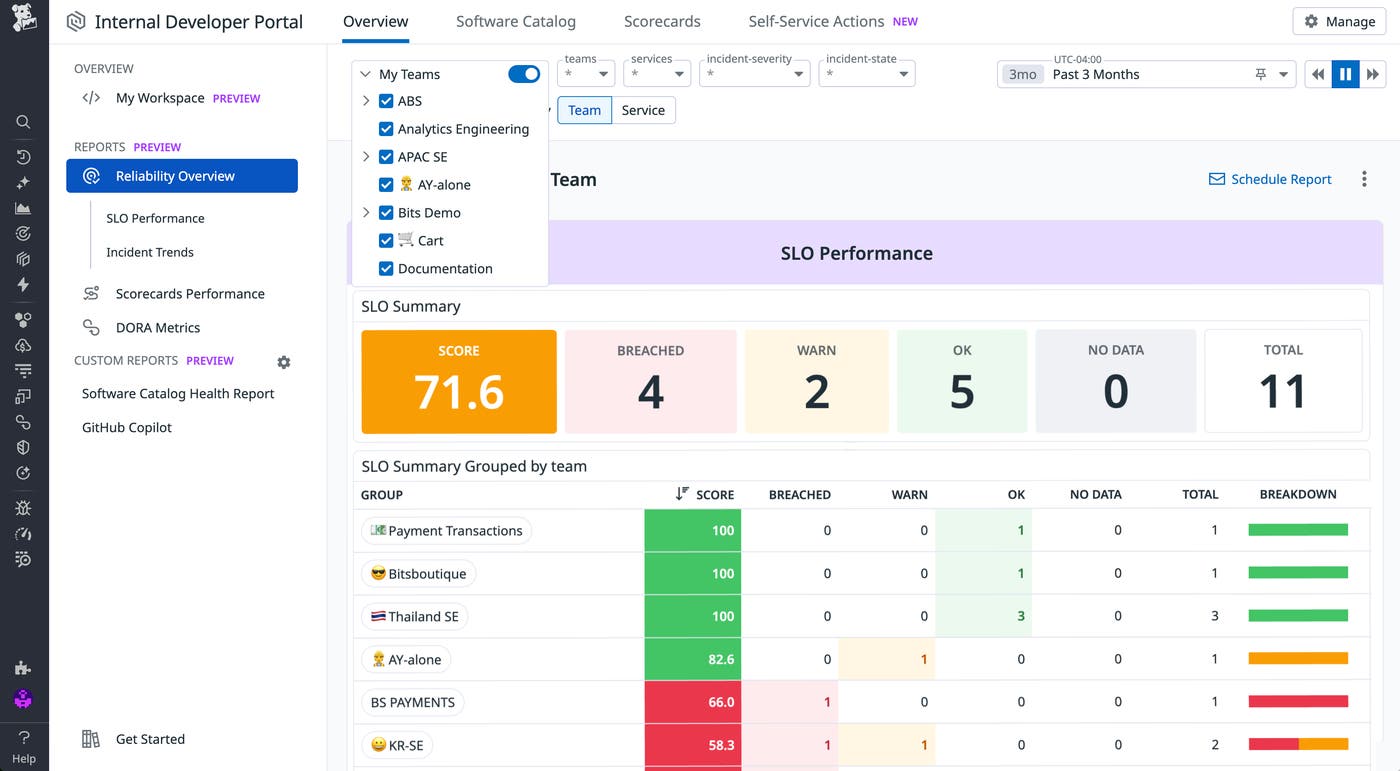
Hierarchy views make it easier to visualize the organization, identify gaps in reliability and adherence to best practices, and confirm that every service has an accountable team. Leaders can also compare performance across departments and allocate resources based on real, aggregated data.
Improve ownership and accountability with Datadog Teams
By connecting GitHub team structures to Datadog Internal Developer Portal and modeling organizational hierarchies, engineering organizations maintain accurate ownership information, reduce operational overhead, and strengthen accountability. These features support faster onboarding, more focused development workflows, and clearer visibility into engineering health at every level of the organization.
To get started, see our documentation for Datadog Teams’ integration with GitHub, explore the Internal Developer Portal onboarding guide, and learn more about Datadog Teams.
If you’re new to Datadog, sign up for a 14-day free trial.
