What is digital experience monitoring (DEM)?
Digital experience monitoring (DEM) gives organizations complete visibility into how users experience their digital products and ties those experiences to business outcomes. It measures, tracks, and optimizes the quality of digital interactions across the full user journey, from the moment a user first encounters an application to the moment they complete their goal. Where traditional monitoring asks whether systems are running, DEM asks whether users are succeeding — a shift from infrastructure health to user outcomes.
Why does the blind spot between systems and user experience matter?
Internal dashboards can show healthy metrics with no active alerts while customers are still encountering slow load times, broken flows, and failed transactions that never surface in the data, because the tools watching the systems were never designed to watch the experience. This blind spot is typically caused by fragmented visibility: when each team owns a different layer of the product with different tools and objectives, no one has the full picture.
The stakes of this blind spot extend across the organization:
- Revenue is at risk. Without visibility into friction, organizations cannot identify critical flows — like checkout or onboarding — that are quietly leaking revenue.
- Brand perception suffers, since users do not distinguish between a backend failure and a frontend bug; they only experience the outcome.
- Customer churn increases as users abandon a flow and open a competitor’s product rather than filing a support ticket.
- Innovation slows, as teams that lack confidence in their releases become risk-averse.
- Operational costs climb, since fragmented visibility makes incident response reactive and time-consuming.
The scale of the underlying problem is significant: according to PwC’s 2025 Customer Experience Survey, 89% of executives believe customer loyalty has grown in recent years, while only 39% of consumers say the same. Forrester’s 2025 Global Customer Experience Index found that customer experience quality hit an all-time low in North America for the second consecutive year, with 21% of brands declining in quality and only 6% improving, and 70% of executives acknowledge that customer expectations are evolving faster than their organization can adapt. Even among customers who love a brand, PwC research shows 59% will walk away after several bad experiences.
Why does DEM matter, and what does it give organizations?
A complete DEM strategy connects every layer of the digital journey: proactive synthetic testing before users encounter issues, real user monitoring and session replay that reveal exactly what users experience and why, and experimentation that validates whether changes are actually making things better. This gives organizations several capabilities:
- Protect revenue by catching problems proactively, identifying and resolving friction before it affects users or impacts revenue.
- See the full picture of what users are experiencing, giving every team a shared, continuous view of product performance from the user’s perspective.
- Reduce the business cost of incidents by shortening the time between an issue occurring and it being identified, diagnosed, and resolved.
- Make product decisions with confidence, using behavioral data and experimentation insights to understand what is actually working.
- Connect digital experience directly to business growth by linking experience quality to adoption, conversion, retention, and revenue.
What are the steps to full visibility across the digital journey?
A complete DEM approach is typically built from four layers of visibility:
Detect friction early with synthetic monitoring. Synthetic monitoring continuously simulates critical user workflows — such as login, checkout, and onboarding — across every environment, around the clock, before issues reach a real user. Without it, issues reach users before teams have any chance to detect or respond, and every undetected regression becomes a revenue event.
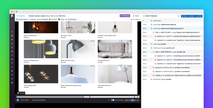
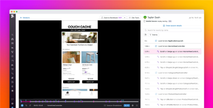
Understand real user experience with RUM and session replay. Real user monitoring measures the availability and performance of real user experiences across web and mobile applications, while session replay provides a video-like recreation of what a user saw and did at the moment an issue occurred. Together, they let teams catch experience failures faster and resolve them before the business feels the impact.
Turn user behavior into confident product decisions. Product analytics surfaces behavioral patterns across the user journey — how users engage with features, where they drop off, and which flows drive the outcomes that matter most. Session replay adds a qualitative layer, and experiments let teams test product changes in a controlled way, measuring impact with statistical confidence before committing to a full release.
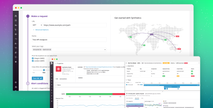
Connect every user interaction to the full stack. Application performance monitoring (APM) traces every user-facing symptom from the frontend experience to its backend root cause, whether the issue originates in a service, a database, a third-party dependency, or the frontend itself. Without this connection, frontend and backend teams operate in silos, and root cause identification is slow and dependent on cross-team coordination.
Conclusion
The organizations that get the most value from DEM are those that connect what matters most to their business, mapping observability data across synthetics, real user monitoring, session replay, product analytics, and experiments to the critical user flows that drive revenue and retention. When monitoring is organized around business outcomes rather than technical components, every team can answer the questions that matter: is this experience working, how is it performing, and what is it delivering for the business.