What is AI agent observability?
AI agent observability is the process of tracing and analyzing an agentic system’s decisions; that is, its pathway through planning, tool calls, and model interactions. AI engineering, through LLMOps, includes AI agent observability by applying continuous deployment and monitoring practices to AI-powered applications and systems.
As AI plays an increasing role in development and production, AI engineering (also known as LLMOps) provides teams with observability into AI agents. In a multi-agent system, each agent performs a specific subtask required to reach the goal, and the agents’ efforts are coordinated through AI orchestration. By making use of AI agent observability, organizations can better understand system behavior and outcomes with tools to analyze end-to-end traces and guardrail signals, not just model latency and error rates.
Why is AI agent observability important?
AI agents refer to systems or programs capable of autonomously performing tasks on behalf of a user or an organization. AI agent observability practices demand a distinct approach to managing and reviewing an AI agent’s actions. These practices enable teams to:
Explain agent decisions. As AI agents take multi-step actions, observability tools enable teams to review an agent’s plan, its tool selection, and any intermediate outputs that underlie the outcomes.
Detect cascading failures. For AI agents, a bad tool call or an incorrect retrieval step can propagate throughout a workflow. Traces reveal where failures start and how they spread.
Control agent cost and latency. Complex AI agents can undertake multi-step loops. These processes can balloon token usage and runtime. Datadog AI Agent Observability can track telemetry at each step, flagging any inefficiencies or unnecessary processing.
Improve safety for tool use. AI agents that can call external systems need monitoring and guardrails to prevent unsafe actions and data exposure. AI agent observability tools track usage, connectivity, and security details.
Accelerate incident response. Operations teams need to respond promptly if an AI agent misbehaves in a production system. Engineers need quick access to traces and examples to reduce guesswork.
How does AI agent observability work?
AI agents access external tools, including databases, search engines, and APIs. These interactions can include recalling prior conversations and task results to enhance the agent’s decision-making. While these capabilities enable AI agents to work independently, they can lead to less transparent workflows than those of traditional applications built on explicit, predefined rules and logic.
AI agent observability tools enable agentic systems to capture rich telemetry, providing organizations with data points that track not only system health but also the agent’s internal reasoning, decision paths, and tool usage. These toolsets are built on the following features:
Agent architecture mapping. AI agent observability tools can document the agent loop (observe, plan, act, and reflect), including the tools the agent uses and the state it maintains (such as memory, scratchpad, or retrieval context). Documenting the loop serves as a blueprint to collect the necessary instrumentation.
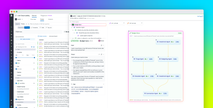
Trace topology for agent workflows. AI agent observability tools capture each agent run as a root “workflow” trace that includes planning steps, model calls, tool calls, and retries. Consider this article on how Datadog addresses the challenges of agent monitoring and visualization needs for AI agent observability.
Decision and state logging. AI agent observability tools can record structured decision artifacts (selected tools, parameters, rationale categories, and safety checks passed/failed) so that engineers can run natural-language queries against the collected data. For example, a team can query the tool to “show all runs where the agent escalated privileges” or “list interactions that looped >N times.”
Guardrails and evaluators. AI agent observability tools can apply policy checks and provide LLM-as-a-judge/rule-based evaluations to prompts, responses, and tool calls to flag risky or low-quality behavior. “LLM-as-a-judge” is an evaluation method where a large language model (LLM) acts as the “judge” and evaluates the quality, accuracy, or relevance of outputs produced by another AI model (the “system”).
Production readiness checklist. Teams can use an AI agent observability tool to define service-level objectives (SLOs) and failure budgets for agent outcomes (including success rate, unsafe-action rate, max steps, or max spend) and to send alerts when those limits are breached.
What scenarios can benefit from AI agent observability?
AI agent observability is vital in high-risk workflows, including finance, healthcare, and security applications. Applying observability practices ensures transparency, enables audit trails, helps identify responsible agents in complex systems, and supports large-scale production. Observability tools for AI agents can monitor model drift, bias, and performance, helping ensure AI reliability and safety.
Consider the following scenarios and priority use cases, and the applicable teams involved, for AI agent observability:
Customer support or IT help-desk agents (for platform and app teams). Observability tools for AI agents can identify whether poor resolutions are caused by retrieval gaps or unsafe instructions.
Developer or code agents (for engineering productivity teams). Applying observability tools for AI agents enables teams to understand why an AI agent chose a particular route to complete a request, where the agent got stuck, and which tool calls caused the error(s).
Multi-agent collaboration (for AI engineers). Teams can use AI agent observability tools to detect handoff failures between AI agents and monitor whether coordination increases cost without improving outcomes.
Tool-heavy workflows (for security and ops teams). AI agent observability tools can track sensitive activities such as ticketing, cloud API calls, and database queries, helping prevent unsafe actions.
Agent rollouts and upgrades (for engineering leads). Teams can use AI agent observability tools to compare different agent versions based on success rates, steps per run, spend per run, and safety violations.
What industry changes are driving approaches to AI agent observability?
The move to agentic, multi-step workflows that handle sensitive data and collaborate across systems shows that traditional metrics like latency and error rates are inadequate. Because AI agents are probabilistic, observability must now track complex causal chains, tool invocations, and retrieval origins for accurate root-cause analysis (RCA) and compliance.
Datadog has several Knowledge Center articles, in addition to product and documentation content, on MCP servers and on monitoring agents and agent SDK integrations, which reinforce that agentic workflows are becoming first-class production workloads.
Other examples of industry changes affecting AI agents include:
Transition to agent-led workflows. Companies are focusing on AI development with autonomous agents that build and operate software, leading to a bimodal environment. Observability must provide real-time context to “blind” agents, enabling them to self-heal and optimize without human intervention.
High-stakes operational integration. AI agents are entering regulated, high-impact sectors such as finance, healthcare, and security operations, where errors carry severe consequences. This underscores the need for explainability and audit trails to ensure compliance and to manage risk in clinical or financial decision support.
Complex multi-agent architectures. As modern applications grow in scale and complexity, AI agent observability must track end-to-end decisions and diagnose subtle quality degradations or hallucinations that traditional latency-based monitoring might miss.
Proactive risk and security detection. As AI agents interact with external APIs and sensitive data, observability tools must detect context compromises and data leakage in real time. These practices ensure that untrusted external content does not corrupt trusted agent contexts (which can evade standard uptime monitoring).
Cost and performance governance. With token usage and model consumption varying widely, organizations are implementing AI agent observability tools to prevent unexpected cost spikes as agents scale.
What challenges are associated with implementing AI agent observability?
AI agent observability faces significant hurdles due to the non-deterministic, autonomous nature of agentic workflows. Errors can compound across multi-step execution paths, complicating RCA. Other examples of hurdles associated with AI agent observability include:
Context propagation across tools. AI agent workflows can span services, queues, and third-party APIs. An inability to trace across contexts can create blind spots.
Non-determinism and noisy failure modes. AI agents can fail differently from run to run, so teams need structured logs and sampling strategies.
High-cardinality “decision” data. Storing full intermediate steps can be expensive and sensitive; teams must balance fidelity with governance.
Evaluating multi-step success. The answer to whether an agent accomplished its task might depend on tool-side outcomes and user satisfaction, not just a final text response.
Security boundaries. Tool permissions and secrets must be monitored and enforced so an agent can’t exceed its intended blast radius.
What features should teams look for when choosing a solution that incorporates AI agent observability?
Key features to consider include the following:
Automatic instrumentation for common agent frameworks/SDKs. The solution or platform should reduce manual work and ensure consistent trace semantics across agent runs.
Agent-native visualizations. An AI agent observability platform should provide a topology view that makes loops, branching, and tool dependencies easy to understand.
Guardrails and evaluation hooks. The solution should enable evaluation of prompts, responses, and tool calls and block or alert on unsafe actions.
Cost and performance breakdown per step. Teams should be able to deploy a solution that provides visibility into token usage, latency, and error rates across planning, model, and tool spans.
Governed access to sensitive payloads. An agentic observability solution should provide redaction, role-based access control (RBAC), and auditability for decision logs and tool inputs/outputs.
OpenTelemetry (OTel) and AI agent observability
OpenTelemetry (OTel) has become a key standard for AI agent observability. OTel addresses the challenge of tracing complex, distributed workflows that involve multiple LLM calls, tool use, and memory searches.
Datadog provides comprehensive OTel compatibility through three ingestion paths: direct OTLP ingestion via the Datadog Agent, the Datadog Exporter for the OTel Collector, and the Datadog Distribution of the OTel Collector (DDOT).
Conclusion
Multi-agentic systems, where AI agents collaborate autonomously, add complexity and make it harder to trace issues and assess reliability. DevOps, quality assurance, compliance, and other teams should consider implementing an AI agent observability platform to capture agentic operations and display each step in a multi-agent workflow, including the tools agents used, handoffs between agents, retries, and errors, helping teams understand how outcomes were produced. Consider Datadog AI Agent Observability’s capabilities to manage AI agents across your technology platform.