The digital transformation journey of a retail giant
GS Retail is one of South Korea’s largest retail conglomerates, best known for operating GS25, the country’s leading convenience store chain with over 18,000 locations nationwide. Beyond its stores, GS Retail runs a home shopping channel, a supermarket brand, and Woori Dongne GS, a super app that integrates shopping, delivery, payment, and loyalty services for millions of daily users.
At this scale, system reliability is directly tied to revenue and customer experience. Payment failures drive immediate support calls from franchise locations, flooding GS Retail’s central call center—making fast, coordinated issue resolution a business-critical priority.
As the company’s platform evolved, GS Retail saw an opportunity to improve how teams shared information during outages. The existing process required customer support, operations, and development teams to coordinate before root cause analysis could begin. Security also operated separately from development and operations, limiting shared visibility across teams. Streamlining troubleshooting workflows and breaking down these silos became essential to help teams act faster with clearer context.
In 2023, GS Retail migrated its entire infrastructure to the cloud following the termination of services at its leased Internet Data Center. The company had to complete the migration on a tight timeline while maintaining business continuity, data consistency, and application compatibility. This included migrating a commercial database that had been in operation for approximately 25 years to PostgreSQL.
Transitioning to a cloud-native architecture also introduced new operational demands. GS Retail needed better visibility into dynamically scaling Kubernetes pods and the ability to automatically scale infrastructure in response to traffic spikes.
From reactive to proactive with unified observability and security
To address these challenges in a coordinated effort, GS Retail selected Datadog as its unified platform for monitoring, observability, and security. Rather than approaching reliability, migration, and security as separate initiatives, the company used a single platform to connect development, operations, and security teams around shared data.
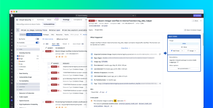
GS Retail refined its incident response workflow by using Infrastructure Monitoring, Application Performance Monitoring (APM), Log Management, and Network Monitoring. The updated approach helped detect anomalies earlier, route alerts to the appropriate teams, and surface root cause data through shared dashboards.
Engineers now work from shared dashboards in Datadog, replacing the guesswork and back-and-forth that had previously slowed issue resolution.
That same visibility proved valuable during the cloud migration. As more than 100 on-premises workloads were migrated in stages, dependencies shifted, new services came online, and unexpected issues emerged. Datadog tracked these changes in real time, enabling teams to quickly identify and resolve problems. Network maps provided engineers a clear view of how services were communicating across the Kubernetes environment, making it easier to understand the system as a whole. The result was a migration that stayed on track without disrupting live services.
Resolving franchise owner inquiries with Real User Monitoring
Beyond infrastructure visibility, GS Retail also needed a better way to understand and resolve issues at the user level. Supporting 18,000 franchise owners is a core part of GS Retail’s operations. To enhance support efficiency, the company focused on improving how it understands and resolves store-level issues.
GS Retail deployed Datadog Real User Monitoring (RUM) to gain direct insight into user experiences. By using session-level identifiers and Session Replay to reconstruct interactions—including user actions and screen states—support teams can now investigate problems based on actual usage data. This approach enables faster, more consistent resolution and improves the ability to validate and prioritize findings, contributing to a reduction in overall support ticket volume.
Shared security ownership through DevSecOps
Before adopting Datadog, security at GS Retail operated in isolation. As the company moved its infrastructure to the cloud, that separation became harder to sustain. Cloud environments introduced new risks, including credential stuffing, ransomware, and misconfigured resources, and addressing these threats reactively across disconnected teams was no longer viable. Building a DevSecOps culture, where security is a shared responsibility embedded into everyday workflows rather than a separate function, became a core objective.
With Datadog, GS Retail established a unified approach to monitoring and security. Logs already collected for operational monitoring were extended into security analysis through Cloud SIEM, without duplicating effort or building separate pipelines. Workload Protection secured workloads at runtime, detecting threats at the kernel level before they could escalate. App and API Protection added a layer of defense directly within the application, identifying and blocking attacks in real time without requiring additional tools.
“The agility and cultural innovation achieved through Datadog serve as a core driving force enabling GS Retail to achieve sustainable growth in a rapidly changing retail environment.”
By bringing these capabilities together in a single platform, GS Retail was able to make security a shared responsibility across the organization. For the first time, every team had the visibility and context needed to play an active role in keeping the business secure.
Building a foundation for sustainable growth
The biggest change at GS Retail was a shift in how the organization works together. Teams that once operated in silos, passing information down a chain and filling gaps with guesswork, now share a unified view of their systems and operate from the same data. Incidents are resolved faster, security is a shared responsibility, and decisions are driven by data rather than assumptions.
This shift has made the business more resilient, allowing teams to identify problems before customers are affected and monitor new services from day one without lengthy setup. The DevSecOps culture GS Retail set out to build is no longer a goal, but the way the company operates today. “The agility and cultural innovation achieved through Datadog serve as a core driving force enabling GS Retail to achieve sustainable growth in a rapidly changing retail environment,” says Jung Hyang-Seon, Executive Director of the DX COE Division at GS Retail.
As GS Retail continues to expand its digital services and cloud-native operations, this foundation enables every team the visibility and shared context needed to move faster, respond more effectively, and operate with confidence at scale in one of South Korea’s most demanding retail environments.