Rapid expansion exposes gaps in platform observability
GetGo is Singapore’s largest point-to-point carsharing service, with more than 3,000 vehicles across 1,700 locations islandwide and over 400,000 registered users. Available 24/7 through its mobile app, GetGo enables drivers to register, book, and access vehicles, making shared, sustainable mobility accessible islandwide.
With a team of more than 30 engineers, GetGo maintains a scalable cloud-native platform on AWS. The environment includes native iOS and Android apps alongside two internal web applications, all supported by an event-driven microservices architecture.
As the platform scaled, the distributed environment exposed significant observability gaps. Teams struggled to correlate issues across services, creating operational overhead and slowing root-cause investigations.
Prior to Datadog, GetGo’s primary monitoring tool could not keep pace with the complexity of a growing distributed system. Without a unified observability platform, teams couldn’t correlate issues across services, leading to time-consuming manual investigations and slow root cause analysis. The operational overhead was significant, and engineering productivity suffered.
The customer experience impact was equally serious. Initially, with no real-time user monitoring, GetGo lacked visibility into user sessions, errors, or behavioral patterns, which left teams unable to accurately diagnose or reproduce issues and respond proactively. “As a company built on delivering seamless, on-demand mobility, any blind spot carries direct risk to user trust and retention,” says Kirivarnan Kumarasamy, Director of Engineering at GetGo. “Limited visibility meant we could not always get ahead of issues. We wanted to move from reactive to proactive, and that required a step change in how we monitored our platform.”
The path to full-stack observability
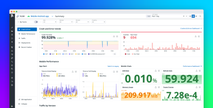
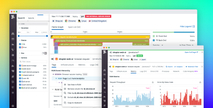
After evaluating its options, GetGo selected Datadog for its unified observability platform. Datadog’s broad multi-language SDK support made integration straightforward across GetGo’s diverse technology stack, while the unified platform brought together Datadog’s vast suite of capabilities—Application Performance Monitoring (APM), Real User Monitoring (RUM), Infrastructure Monitoring, Dashboards, Log Management, Sensitive Data Scanner, and Software Composition Analysis—eliminating the context switching that had previously slowed engineers down. Critically, RUM filled a major gap by giving the team visibility into mobile application behavior.
The onboarding process was notably smooth, with Datadog’s account and support teams providing hands-on guidance and best practices, ensuring a fast and efficient implementation across the entire engineering team.
“Datadog has fundamentally changed how our teams operate. We can now detect and resolve incidents before they significantly impact customers, providing our engineers with the confidence to move quickly without compromising reliability.”
Every engineering team at GetGo now relies on Datadog as the backbone of its monitoring, troubleshooting, and reliability operations, with the DevOps team relying on Datadog most heavily for infrastructure monitoring, alerting, and operational visibility. The improved visibility supports both day-to-day performance and longer-term ambitions around growth, market expansion, and exploring AI-augmented capabilities.
Real-time insight drives efficiency and growth
Consolidating its observability has enabled GetGo’s engineering teams to work with greater speed and confidence. With Datadog, bug investigations that previously took several hours are now completed in 60% less time, freeing engineers to focus on feature development and innovation and accelerating overall product velocity.
Alerts and monitoring through the Datadog platform have also improved GetGo’s incident response and resolution time, reducing mean time to detection (MTTD) and mean time to resolution (MTTR) by 40% on average. This proactive monitoring and alerting approach has minimized downtime and helped teams identify issues earlier, ensuring a consistently available platform for GetGo’s 400,000 registered users.
“RUM has given us a level of mobile visibility we never had before, enabling faster responses to user issues and a smoother experience for our customers.”
RUM in particular has given GetGo an entirely new lens on the mobile experience. GetGo can now track 100% of mobile user sessions through RUM, monitoring user journeys, behavioral patterns, and surfacing and solving issues that previously went undetected. “RUM has given us a level of mobile visibility we never had before, enabling faster responses to user issues and a smoother experience for our customers,” says Kumarasamy. “The rich insights generated through Datadog allows our teams and leadership to make more informed decisions on performance optimization, scaling, and future investments.”
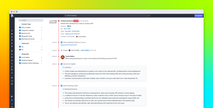
Looking forward, GetGo is exploring AI-augmented and agentic capabilities to boost engineering productivity and deliver smarter, more personalized features across its platform and mobile app. This includes AI-powered log analysis, monitoring, and security through Cloud SIEM and Bits Investigation, and will support GetGo’s expansion beyond Singapore.
“We went from reacting to problems to engineering ahead of them, and Datadog made that possible. The confidence that full visibility into our platform provides is what will help us scale and expand into new markets.”